
U2C Exchange · Cash · Banknote series and denominations
Older dollars, large euro notes and damaged banknotes: what to agree before exchanging
“The banknote is genuine. Why will they not accept it?” Authenticity, legal tender status and the terms of a particular exchange are different matters. Here is what to tell the manager about your cash and what to ask about the notes you will receive.
Answers from the U2C Exchange team to customer questions.
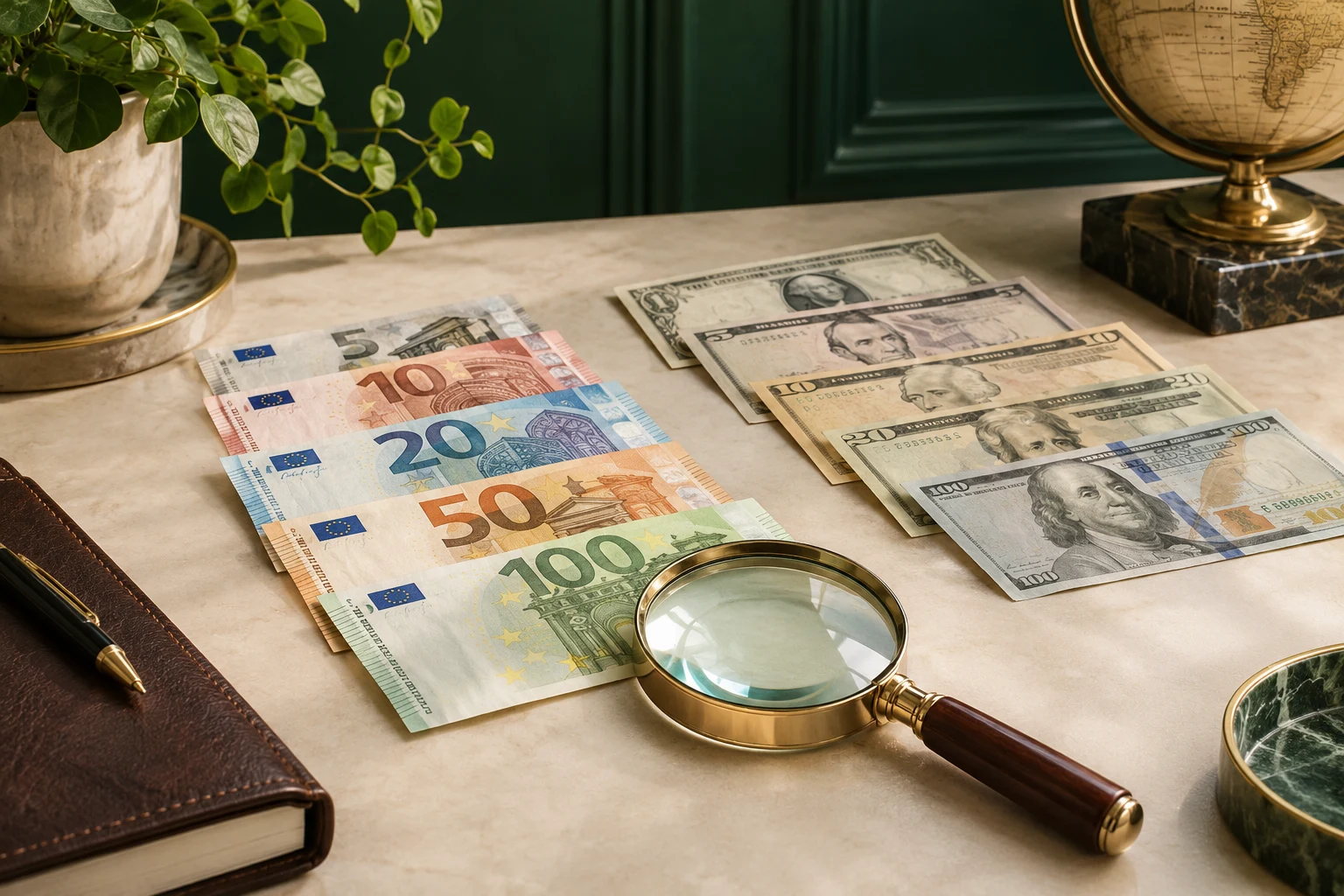
An older dollar design does not mean it is invalid
Under US policy, dollars with older designs retain their legal tender status. However, foreign-currency acceptance in other countries depends on the local market and the organisation involved. A valid banknote is therefore not guaranteed to be exchanged at any advertised rate in any country.
Do not buy older series merely because they are cheaper without checking how you will use them. The saving may disappear at the next exchange or if the notes are refused. Tell the manager the series and condition of your notes from the outset, as well as the amount.
What applies to your U2C route
U2C’s Ukrainian cash route does not accept older-design US dollars. For other routes, confirm which series are available and the required condition before handing over money. Terms for one city do not automatically apply elsewhere.
If you are unsure how to identify the series, ask the manager about preliminary checks and, if needed, send a photo of the banknote privately. A photo helps establish its type and condition, but does not replace an authenticity check when the cash is accepted.
What about €200 and €500 notes?
The €500 note is no longer issued in the new series, but retains its value and legal tender status. That does not make it equally convenient for purchases or ATM deposits. Choose denominations with their intended use in mind.
Ask your bank whether deposits are available and what equipment the branch has. When receiving cash, agree your preferred denominations in advance and wait for confirmation. Detailed preparation is covered in our article about depositing cash into a bank account in Spain.
Stains, tears, repairs and ink marks
A small mark and serious damage may have different consequences for acceptance. Do not try to wash notes or remove ink with chemicals: this can damage security features and make verification harder. Keep every part of a damaged banknote.
Exchanging or obtaining reimbursement for damaged money is a separate procedure that depends on the currency and institution. An exchange service is not obliged to provide it as part of an ordinary cash transaction. Check whether your particular notes can be accepted before travelling.
How to avoid disagreements about payout notes
Record the currency, amount, agreed denominations and acceptable condition. If the exact composition is unknown until the bundle is prepared, ask when it will be confirmed and what happens if it is unsuitable. A preference has not become an agreed term until the operator confirms it.
Compare the whole exchange result: the final amount, denominations, costs and timing. Our article why the best headline exchange rate is not always the best deal helps assess these terms together.
What information to send U2C
Give the city, amount, currency, series and any noticeable features of your banknotes. If receiving cash, explain whether it is for travel, a bank deposit or a particular payment. We will confirm available terms; preliminary agreement does not replace the physical check.
Start with our pages for Ukraine, Spain or other countries. If you find a discrepancy after collection, contact the manager immediately using the agreed procedure.
Related services and destinations
Why U2C does not offer simultaneous cash and crypto handovers in Europe: risks of carrying a large sum and an account of an attack in France. Sending money to relatives for cash collection: city, currency, recipient details, rate, timing and how to agree the transaction with U2C. Buying USDT with cash: prepare your own wallet or exchange account, agree the network, verify the address and confirm receipt.Read also

Why U2C does not offer simultaneous cash and crypto handovers in Europe

How to send money to relatives abroad who do not have a bank account
How to buy USDT with cash: preparing your wallet and checking payment details
Comments and questions
Do not post request numbers, phone numbers, wallet addresses or other personal details. Contact a manager about a specific exchange.
No comments yet. You can ask the first question.