
U2C EXCHANGE · EXCHANGE RATES AND TERMS
Why the best headline exchange rate is not always the best deal
Andrei found a USDT-to-euro-cash rate better than the others. The difference looked convincing until he asked when he would receive the money, in which denominations and how much would remain after fees.
A tempting number can come with real conditions: up to 72 hours’ waiting, separate delivery charges or large-denomination notes. Those conditions do not themselves mean fraud. But discovering them after payment can make the exchange much less attractive than it first appeared.
Andrei is fictional. The story and calculations are illustrative, not a customer review or current offer. U2C Exchange team.
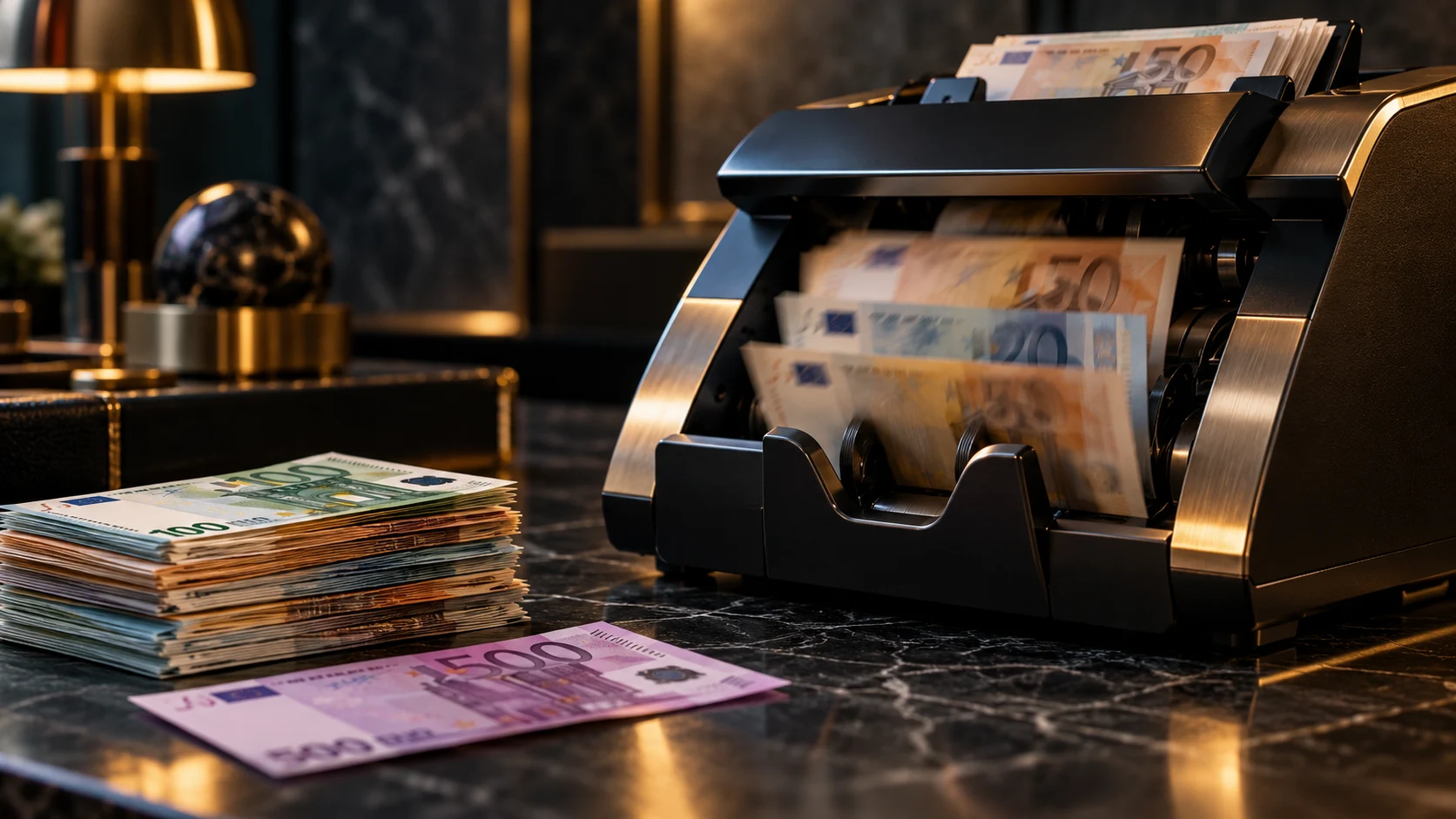
At first, Andrei compares just one number
He needs euros in Spain and already holds USDT. The task seems simple: choose the offer promising more cash for the same crypto amount. He opens several options and chooses the most attractive.
But Andrei needs the cash tomorrow. He asks whether a morning meeting can be arranged. The order allows payout within 72 hours. Earlier receipt may be possible, but no time tomorrow has been confirmed.
This is the first difference between expectation and offer. “Within 72 hours” means up to three days, not necessarily a full three-day wait. Nevertheless, Andrei cannot plan tomorrow’s payment around it.
He next asks which notes he will receive. The answer is mainly €500 notes. Smaller denominations can be discussed, but with a different quote. He then learns that the service commission is excluded from the initially displayed amount.
He now sees three parameters: rate, timing and actual collection terms. Comparison is harder, but he can make an informed choice before sending funds.
The rate does not yet tell you how much money you receive
“Rate fixed” answers only some questions. Establish the amount to which it applies, whether the service’s remuneration is included and which costs are separate. Sometimes commission is already included; sometimes it is deducted from payout or charged on top of the original amount.
Cash delivery, USDT network expenses and third-party bank fees may also apply where a bank stage is involved. They do not necessarily all arise together. Ask for the costs specific to your order.
A useful question for the manager: “If I send this exact amount, how much cash will I receive after all deductions? What else must I pay separately?”
Ask for the currency, city, timing, denominations and quote validity in one message. This makes the complete terms easier to understand and retain.
If planning a USDT-to-cash exchange, separately confirm the network, receipt confirmation procedure and when the payout clock starts. Timing from order creation differs from timing after crypto receipt.
How the advantage disappears in the final calculation
Suppose Andrei receives two offers for the same original amount. The first promises €18,600 before separate deductions; the second €18,450 with service and delivery included. At first, the first offer appears €150 better.
| Term | Offer A | Offer B |
|---|---|---|
| Initial amount | €18,600 | €18,450 |
| Separate service fee | 1%: €186 | Included |
| Separate delivery | €50 | Included |
| Net cash after these costs | €18,364 | €18,450 |
| Agreed timing | Up to 72 hours | Next day |
| Denominations | Mainly €500 | Agreed in advance |
These figures illustrate the mechanism. They are not current rates, U2C tariffs or offers from specific services. Network costs are assumed equal and are omitted.
After two deductions, the first offer pays €86 less. This excludes any cost of changing denominations; assuming such costs are inevitable would be wrong. Even without them, the comparison has changed.
Compare like with like: the same original amount, city, currency, suitable denominations and required date. If these differ, a better headline rate does not establish a better deal.
What is inconvenient about €500 notes in Spain?
Andrei plans to use some cash for everyday expenses and deposit the rest into his account. Large notes are convenient to carry but may not suit those plans. Check acceptance and change availability in advance, especially where a purchase is far smaller than the note’s value.
€500 notes remain legal tender. Issuance ended, but the notes were not withdrawn and retain their value. Calling them invalid or entirely unusable is incorrect. The ECB’s decision to stop issuing them concerned possible use in illicit activity, not a declaration that all such notes are suspicious or counterfeit.
Practical restrictions still exist. ABANCA, for example, explicitly states that its ATMs do not accept €500 notes. Check other banks and individual machines separately. Receiving cash does not guarantee immediate deposit into the nearest ATM.
If you need change or a counter deposit, ask about the procedure, appointments and possible fees beforehand. Banco de España also exchanges euro denominations under its service rules. It is therefore wrong to say changing notes is always charged or impossible.
What about questions from the bank and tax authorities?
A bank may request source-of-funds documents. Cash transactions can prompt such questions regardless of denomination. Mandatory bank reporting and an individual tax investigation are different procedures. Depositing a €500 note does not automatically trigger an investigation or a separate tax.
Smaller notes solve a convenience issue, not documentary requirements. Keep agreed exchange terms, transfer and payout evidence and records explaining the original source. Requirements depend on the circumstances and bank; Spanish procedures do not automatically apply to other countries.
For cash in Spain state the city and preferred denominations beforehand. The manager should confirm availability and cost before you hand over money.
Waiting time matters too
Without a fixed date, up to 72 hours might suit Andrei. But if a meeting with a seller or another payment is agreed for tomorrow, uncertainty becomes a material condition.
Ask both “how long?” and “what exactly is confirmed?” Is there an agreed meeting time? What starts the clock? Are weekends and courier availability included? What happens if collection is postponed?
Clarify rate fixing separately: its validity, whether funds must arrive before a deadline and whether the quote can change before payout. Do not infer terms from an advertising promise; keep them in the conversation alongside the exchange rules.
If considering a bank credit instead of cash, compare it separately. A cashless transfer has its own stages, costs and bank checks. A cash-payout time frame does not automatically describe a bank route.
Five questions before sending money
After asking for clarification, Andrei stops asking only about the rate. He sends a short message that you can adapt for your order:
“I plan to exchange … USDT for euro cash in … . Please confirm the net cash amount, all separate costs, payout date and time, banknote denominations and rate validity. What terms apply if the required notes are unavailable or collection is postponed?”
- How much do I receive after all fees? Clarify deductions from payout and any amounts payable separately.
- When and where is collection? Agree timing and its starting event, plus delivery cost if applicable.
- Which notes will I receive? Record acceptable denominations and substitution terms before payment.
- How long is the quote valid? Clarify rate fixing and the consequences of a delay in sending or receipt.
- What happens if terms change? Ask beforehand about postponement, cancellation and refunds, including possible costs.
Keep messages, the order number and proof of payment. For crypto, keep the transaction identifier; for cash payout, retain available receipt evidence. These help reconstruct agreed terms if questions arise.
How Andrei finally chooses
He does not abandon a good rate. He asks to compare offers for one task: receiving a specific euro amount in the right city, by an agreed date and in suitable notes. It then becomes clear which pays more net cash and which merely displays the better first number.
Sometimes waiting and large denominations are entirely suitable. In other circumstances, a less impressive headline rate with a clear net amount and convenient payout is better. The choice depends on what you will do with the cash afterwards.
Request a quote for your needs
Tell the U2C manager your original amount and currency, collection city, preferred date and denominations. Ask for the net amount and cost breakdown before handing over funds.
Start with the exchange calculator, and clarify details through U2C Exchange’s official contacts. Final terms and execution availability are confirmed for each order.
Short answers
Does a good rate mean fees are included?
Not necessarily. Ask for the net cash amount and every separate expense. Only then can offers be compared.
Are €500 notes no longer valid?
They remain valid and retain value. Issuance ended, not validity. Practical restrictions may still affect payments, changing notes and ATM deposits.
Does “within 72 hours” always mean three days?
No, payout may happen earlier. Rely on a specific day only after confirming the time and the event from which timing starts.
Do smaller notes guarantee no bank questions?
No. A bank may request source-of-funds evidence regardless of denomination. Convenience and documentary requirements are separate issues.
Why U2C does not offer simultaneous cash and crypto handovers in Europe: risks of carrying a large sum and an account of an attack in France. Buying USDT with cash: prepare your own wallet or exchange account, agree the network, verify the address and confirm receipt. Check the amount, denominations and condition of cash received after a USDT exchange: preparation, counting, authenticity features and reporting discrepancies.Read also

Why U2C does not offer simultaneous cash and crypto handovers in Europe

How to buy USDT with cash: preparing your wallet and checking payment details

How to check cash received after exchanging USDT
Comments and questions
Do not post request numbers, phone numbers, wallet addresses or other personal details. Contact a manager about a specific exchange.
No comments yet. You can ask the first question.